
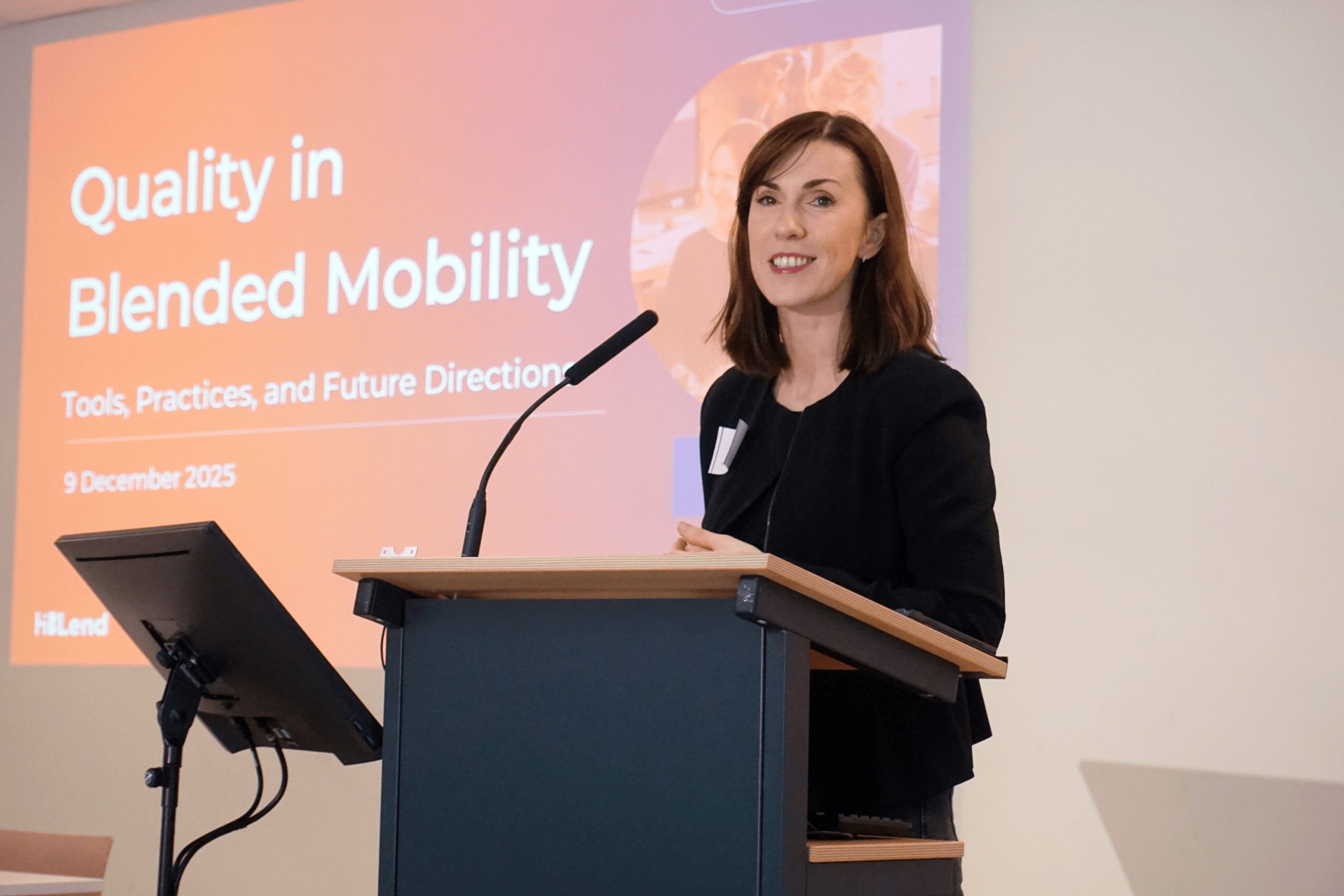
On 9 December, more than 140 participants, both in Brussels and online, gathered for the final conference of the HIBLend project. The event marked a key moment for student blended mobility in European higher education, bringing together institutions, policymakers, quality assurance bodies, student representatives and project partners to reflect on where blended mobility stands today, and how its quality can be ensured in the long run.
Throughout the day, panels, presentations, live demonstrations and interactive thematic sessions offered a shared space to exchange experiences, challenge assumptions and explore concrete solutions for designing meaningful and sustainable blended mobility models.
Launching practical tools for quality in blended mobility
A central highlight of the conference was the official launch of the HIBLend framework on quality in student blended mobility, alongside the digital toolbox developed within the project.
Angeliki Psychogyiou from the Academic Cooperation Association (ACA), HIBLend project coordinator, presented the framework to participants. Designed as a practical guide for higher education institutions, the framework supports institutions in designing, implementing and evaluating high-quality student blended mobility. It addresses key institutional, pedagogical and strategic dimensions, ensuring that blended mobility initiatives are well structured, effectively managed and aligned with the 2015 European Standards and Guidelines (ESG) for Quality Assurance. The coordinator highlighted how the framework strengthens the sustainability and scalability of blended mobility, while fostering greater collaboration, inclusivity and excellence in higher education mobility activities.
Following the presentation of the framework, participants were introduced to a live demonstration of the interactive digital toolbox, which brings all components together. The toolbox offers a visual representation of the framework, spotlights good practices from across Europe through a heatmap, and provides practical resources to support institutions in translating quality principles into daily practice and strategic decision-making.
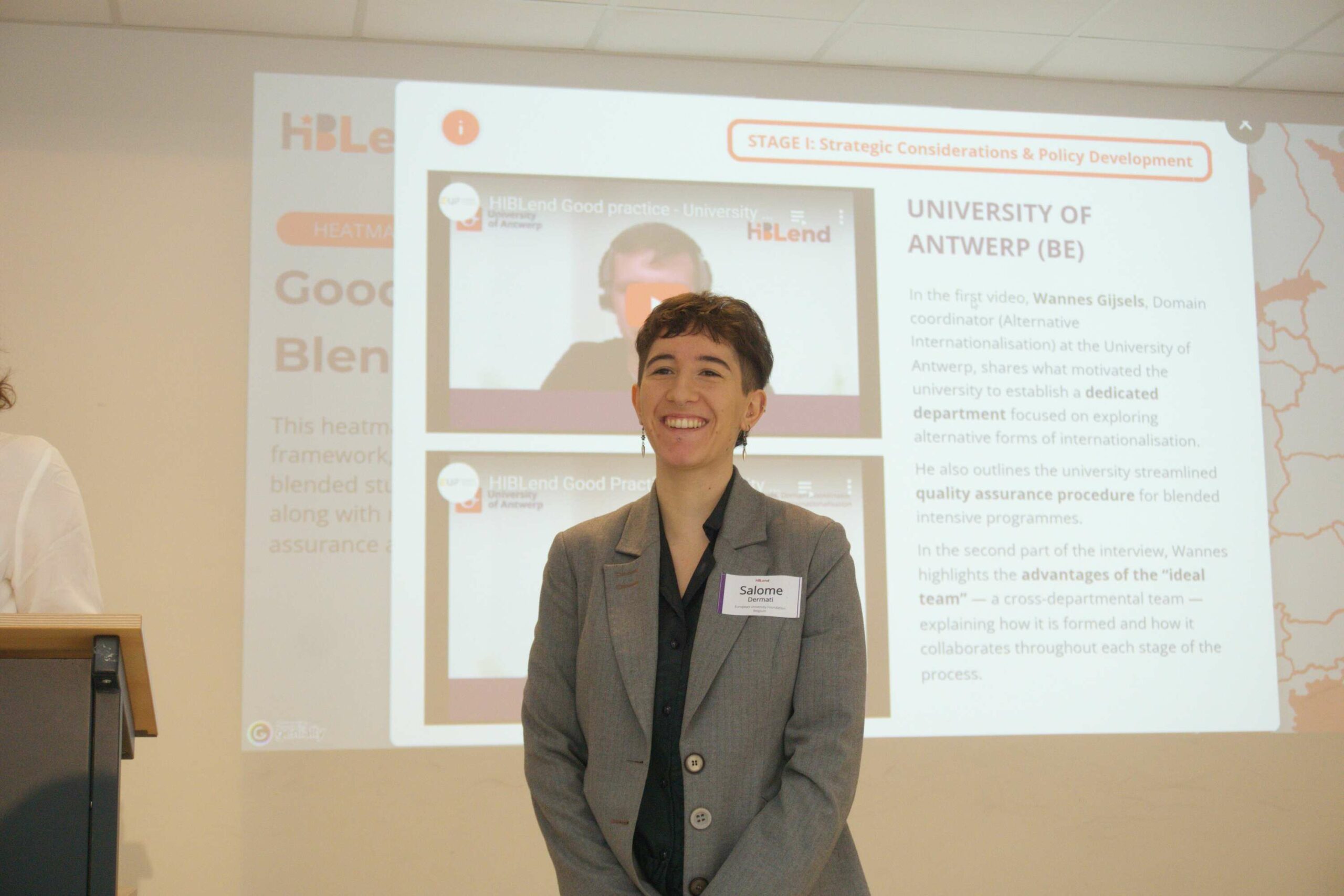
Salome Dermati (EUF) presenting the digital toolbox
Why quality in Student Blended Mobility matters
One of the main discussion threads throughout the conference focused on a simple but crucial question: why ensuring quality in student blended mobility is essential for the future of international higher education.
Speakers from European institutions, quality assurance agencies, student organisations, and policy bodies, including representatives from the European Commission and Erasmus+ National Agencies, agreed that blended mobility has moved beyond experimentation. Participation numbers have increased significantly in recent years, reflecting growing institutional interest and student demand. As Božidar Grigić from the Slovenian National Agency for Erasmus+ and HIBLend Advisory Board member noted, “it works”, but clear areas for improvement remain.
Discussions highlighted that quality in blended mobility is first and foremost about support, coherence and inclusion. ESN president, Simone Lepore, warned that without clear connections between the online and physical components, as well as with the local community during the latter, blended mobility risks losing much of its potential, especially as it increasingly becomes students’ first point of entry into Erasmus+. Panellists emphasised that students participating in short-term or blended mobility require just as much institutional support as those in long-term mobility. Quality assurance was therefore framed not as a constraint, but as a methodology: a shared framework, co-developed with higher education institutions, quality assurance agencies and student organisations, can help ensure consistency, innovation and mutual trust. Investment in organisational support, digital solutions, and the pedagogical capacities of academics is essential to make blended mobility scalable, meaningful, and sustainable.
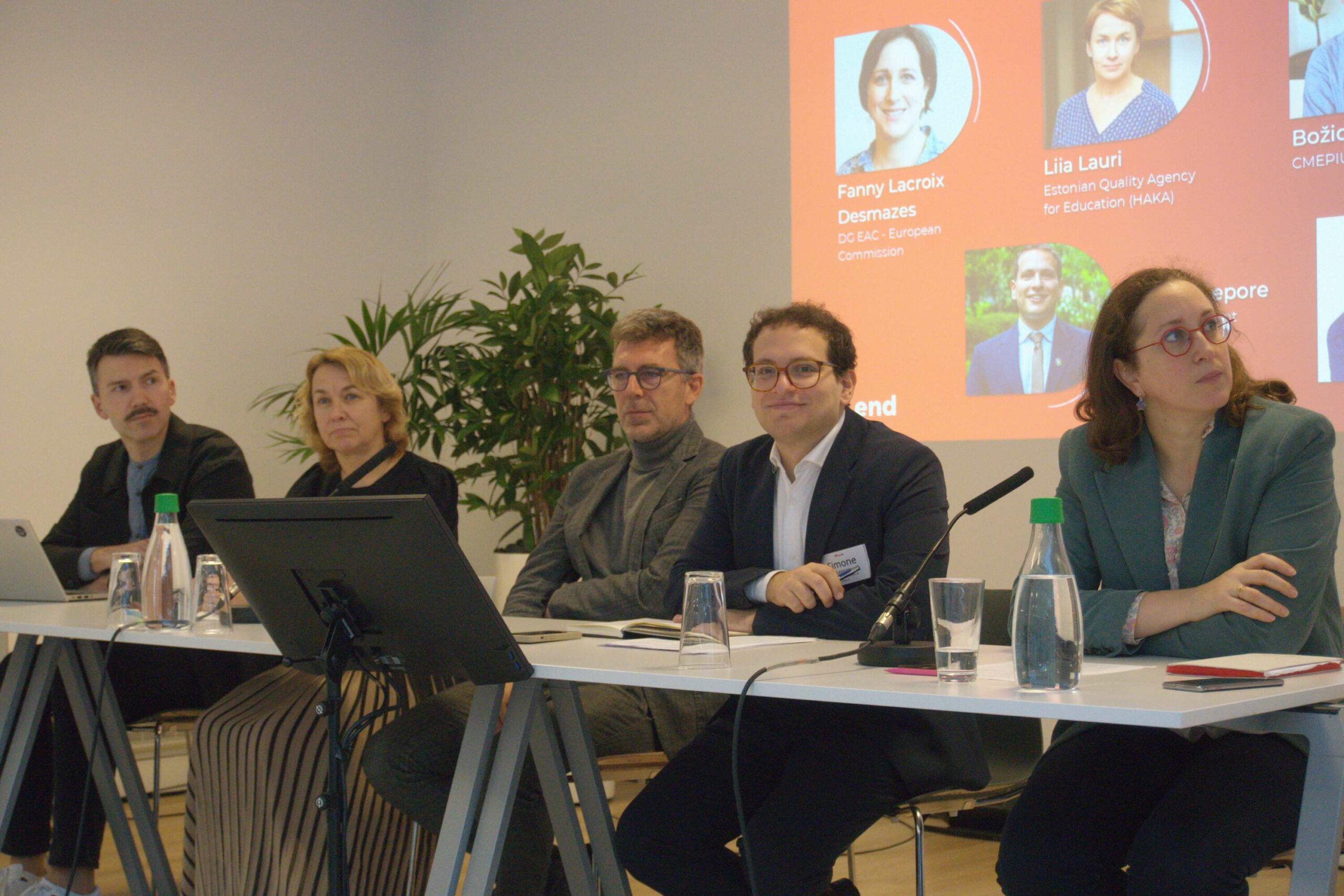
From left to right: Božidar Grigić (Head of Higher Education Unit, CMEPIUS), Liia Lauri (Head of Higher Education, Estonian Quality Agency for Education), Roberto Napoli (Challenges coordinator and Key account manager, ECIU University), Simone Lepore (President, Erasmus Student Network), Fanny Lacroix Desmazes (Policy Officer, European Commission).
From principles to practice: institutional experiences
The conference highlighted concrete institutional practices in designing and delivering student blended mobility, showcasing diverse approaches and practical insights. Professor Robert O’Dowd from the University of Léon presented a BIP, illustrating how online and physical components are carefully integrated to foster collaboration, intercultural learning, and active student engagement, while addressing challenges such as coordination and digital readiness. Wannes Gijsels, Domain Coordinator for Alternative Internationalisation at the University of Antwerp, presented how alternative blended mobility formats fit within the university’s broader internationalisation strategy, highlighting shorter, thematic-focused programmes, drivers of participation, and barriers to uptake, such as the involvement of domestic students. Meanwhile, Thibault Hoogstoel, Policy Officer for Internationalisation at the University of Ghent, walked participants through the full administrative cycle of BIPs, underscoring common bottlenecks and practical tools used to improve efficiency, coordination, and structural support for staff and students. Collectively, these presentations emphasised how tailored institutional strategies, pedagogical choices, and robust administrative processes converge to deliver high-quality, sustainable blended mobility experiences.
Blended mobility as an institutional strategy
Looking ahead, the closing panel explored the strategic and sustainable integration of blended mobility across institutions. Runa Vigdís Guðmarsdóttir, Director of the Icelandic Erasmus+ National Agency and Eva Haug, Educational Advisor from Amsterdam University of Applied Sciences, highlighted how blended mobility addresses specific student needs, enhances access, and complements broader internationalisation goals. Lars Banzhaf, Co-Head of the Mobility Unit at the CIVIS University Alliance, and Eeva Heikkilä, Project Manager at Tampere University of Applied Sciences, reflected on the added value of blended formats in fostering trust and collaboration, intercultural learning, global citizenship values, and alliance-wide cohesion.
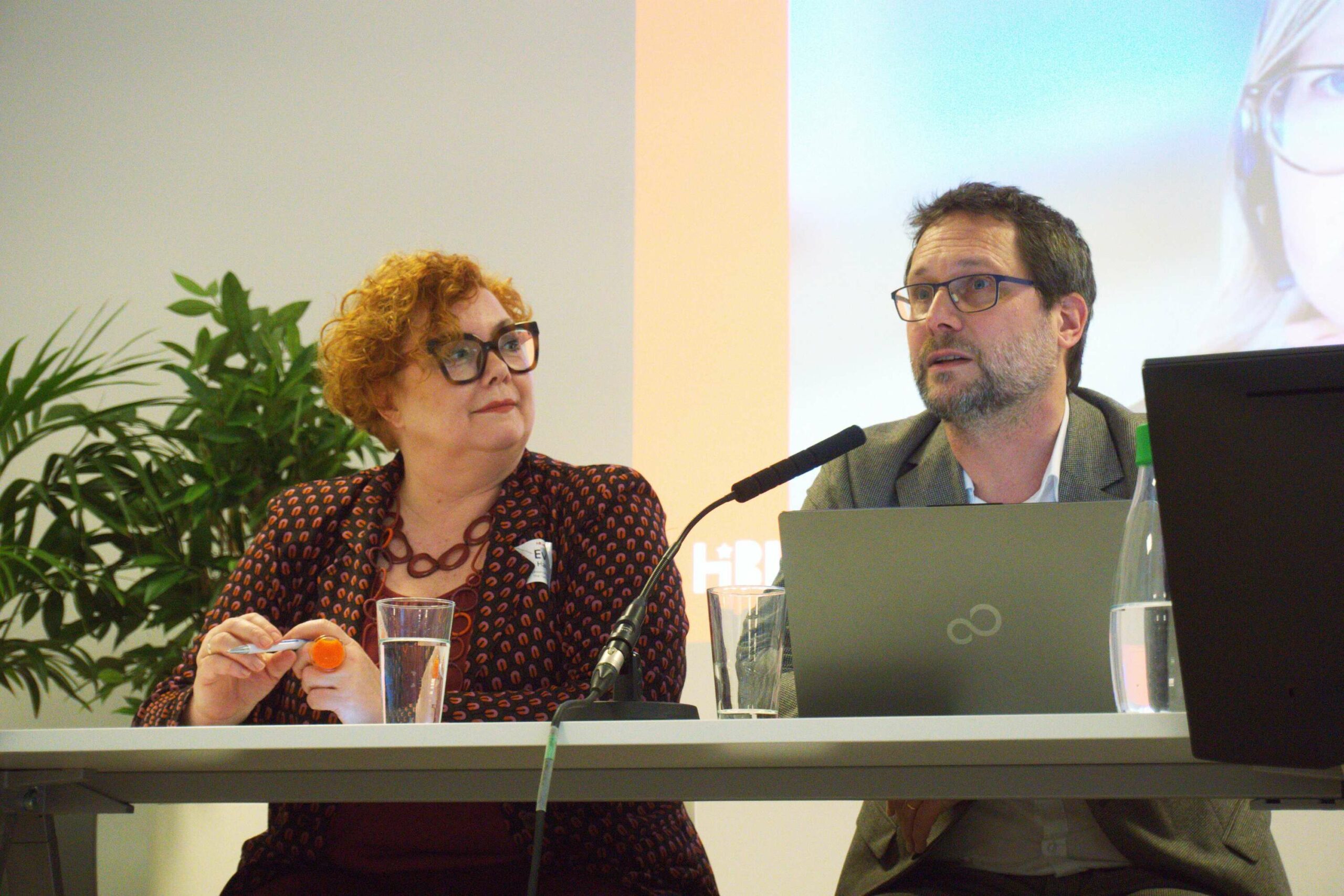
On the left: Eva Haug, Educational Advisor for Internationalisation of the Curriculum and COIL/Virtual Exchange (Amsterdam University of Applied Sciences). On the right: Lars Banzhaf, Head of the Mobility Unit (CIVIS Alliance).
Finally, participants stressed how overcoming persistent barriers, such as limited resources, faculty engagement, and reliance on isolated champions, requires coordinated strategies and mechanisms, both institution- and alliance-driven, to ensure blended mobility becomes sustainable, widely accessible, and pedagogically meaningful, with online and physical components aligned to their intended learning outcomes.
The HIBLend conference underscored the importance of quality, strategy, and synergies in blended mobility. With its new framework and digital toolbox, the project provides practical guidance to make blended mobility more meaningful and inclusive. Institutions are now equipped to turn lessons from the project into sustainable, high-quality international experiences for students across Europe.
This is why we invite all interested practitioners to continue the discussion in our Blended Mobility LinkedIn Group, where peer learning is encouraged, and knowledge is shared. On January 19th and February 4th, we will host two short webinars to guide you through the new HIBLend toolbox and framework, so make sure to save the date!
Missed the conference or want to revisit the highlights? The full recording is now available on ACA YouTube channel! Watch it here.